Public
Pays by plate. Settled vehicles pass; unsettled ones pay by QR at the barrier without leaving the car.
asasiiparking
asasii Parking runs the lanes, the season programme, the tenant allotments and the collections for a commercial property or a portfolio of them. No concession, no revenue share, no cash on site. Every device, every record and every ringgit stays with the owner.
No ticket, no card at the barrier, no cash. The plate is read on the way in, the session runs while the car is parked, and the exit lane settles it without a person in the loop.
The camera reads the plate as the vehicle approaches. Season, tenant and booked plates are recognised and the barrier lifts. A public vehicle is welcomed and told to pay by plate before leaving.
The session runs against the plate. The driver pays from a phone, a pay station or a merchant counter, and tenant validations apply to the session automatically.
A settled plate drives straight through. An unsettled one sees the amount on the lane display and pays by QR at the barrier. Nothing at the exit depends on an attendant.
The exit lane sets the throughput of the whole car park. The platform is built so that most vehicles never stop there at all.
Pays by plate. Settled vehicles pass; unsettled ones pay by QR at the barrier without leaving the car.
Recognised on entry and exit. The pass is tied to the plate, reserved levels are enforced by the lane, renewals happen in the customer account.
Allotments from the lease. The tenant manages its own vehicles and validations in its portal; the property sees the usage and bills the excess.
A bay reserved ahead for an event or a visitor. The plate is expected, the barrier lifts, the booking closes on exit.
Tenant parking is a term of the lease, not a separate product. The platform derives the quota from the tenancy and bills it on the rent cycle, e-invoiced under the property's tax number.
Each tenancy carries a parking allotment derived from its lettable area, on the same basis the lease uses.
The tenant registers plates against the allotment. Every registered plate is recognised at the lane from the next morning.
Plates above the allotment are charged at the season rate, approved by the property, and shown separately on the invoice.
Parking appears as a line on the tenant's regular invoice, e-invoiced and reconciled with the tenant's statement.
Nobody shares a screen. The operator, the property manager, the IT team, the group and the customer each get a console built for the decisions they make.
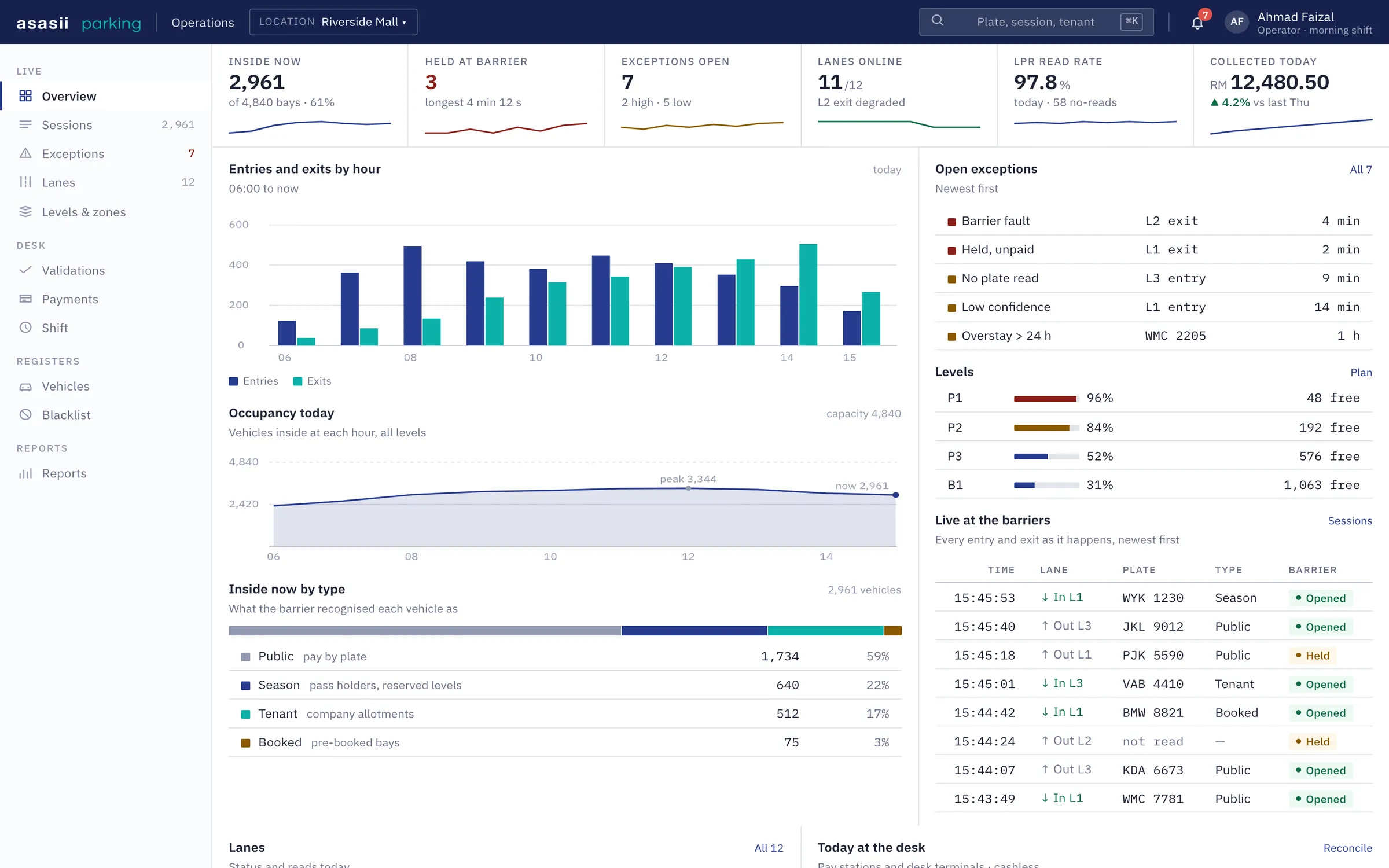
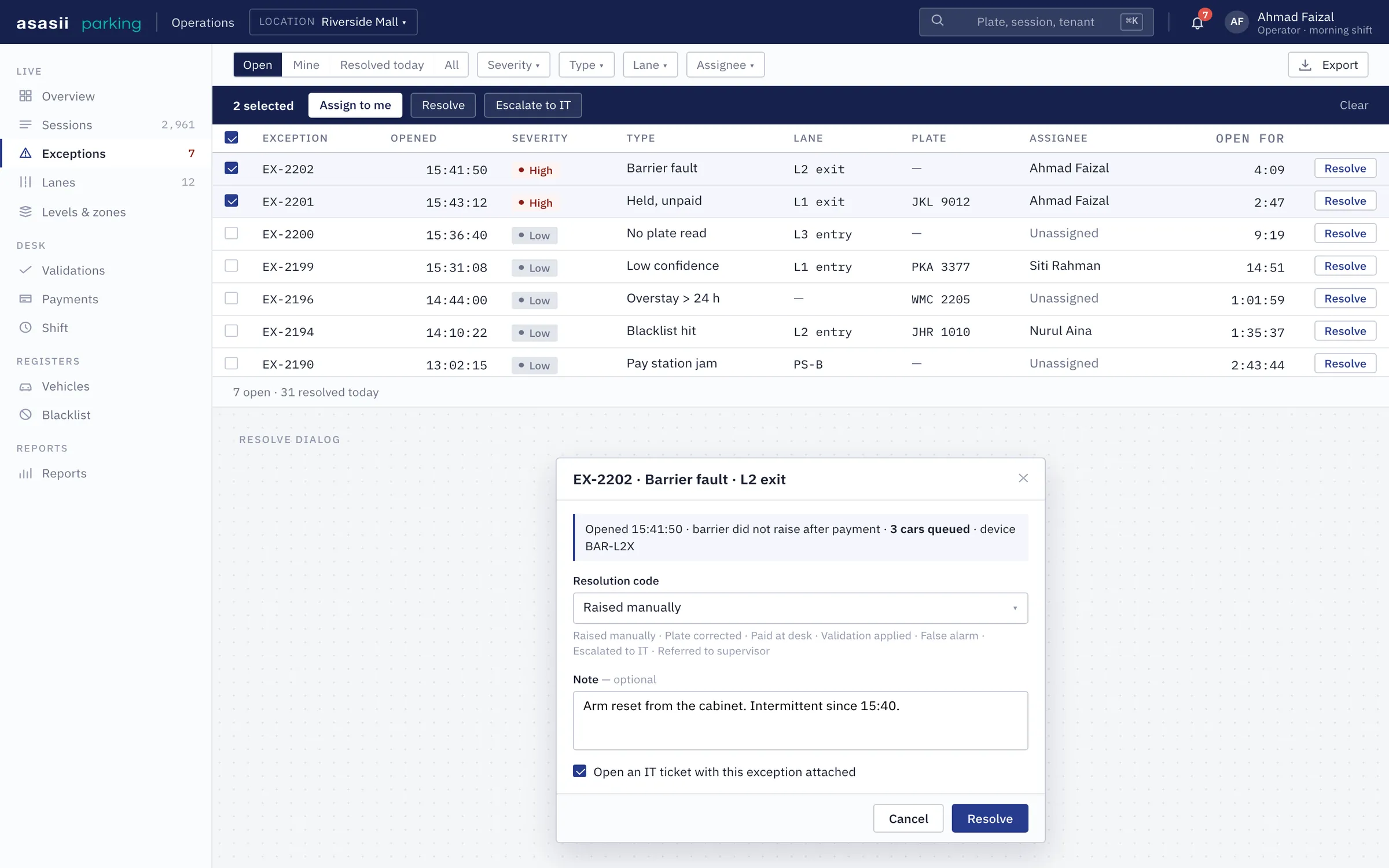
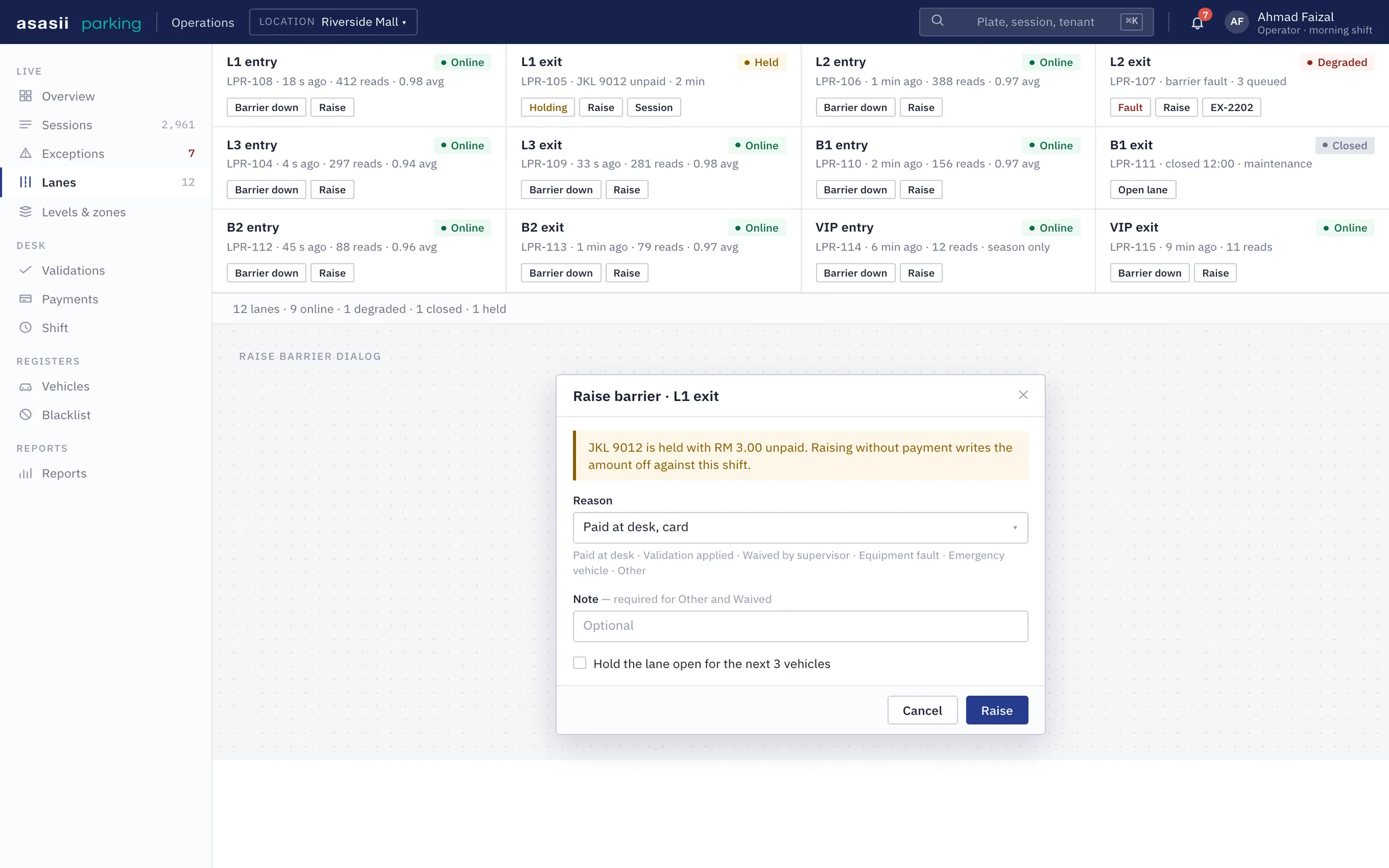
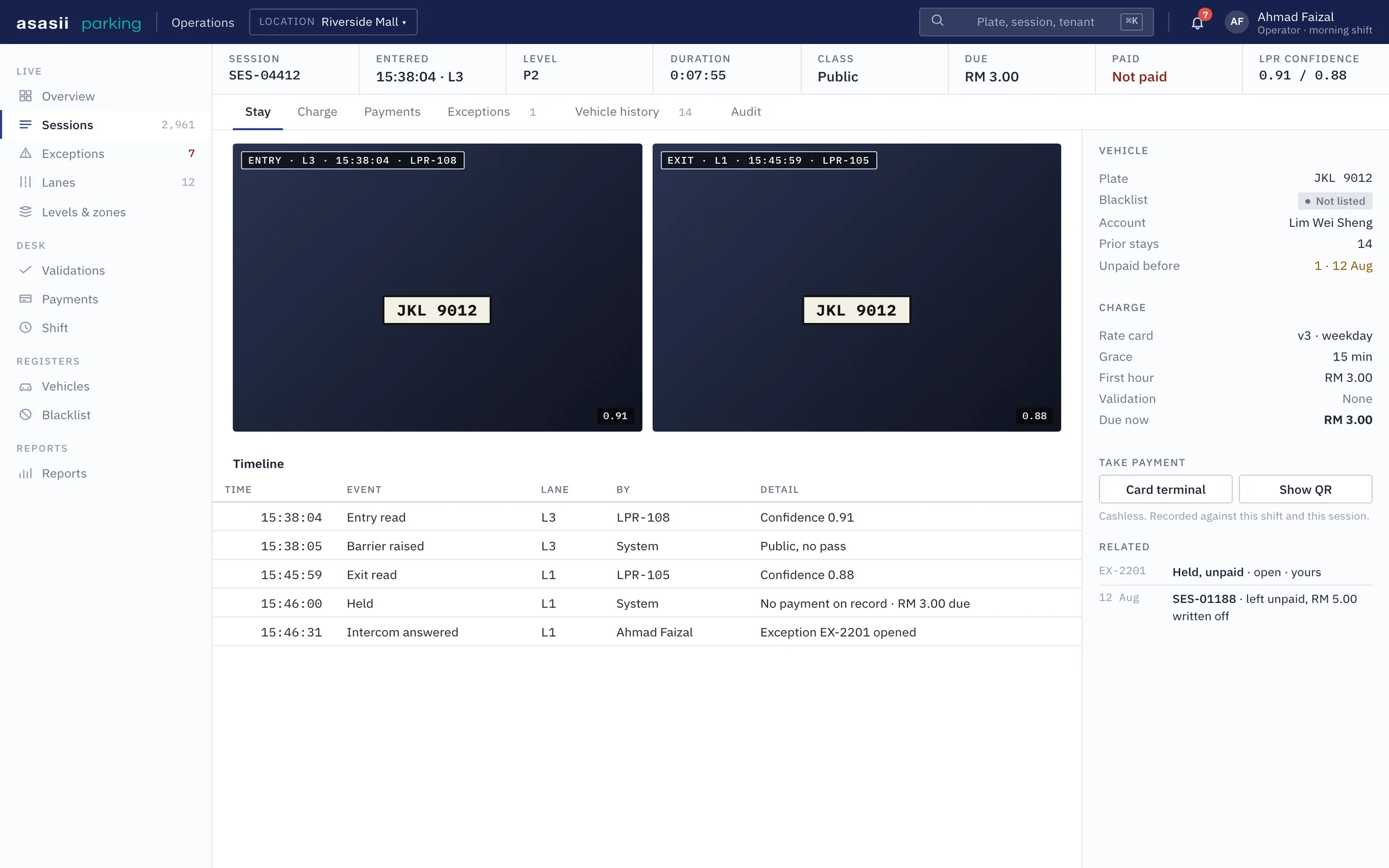
The touchpoints at the property share the same platform and the same design system as the consoles, so a driver, a merchant and an attendant see the same session.
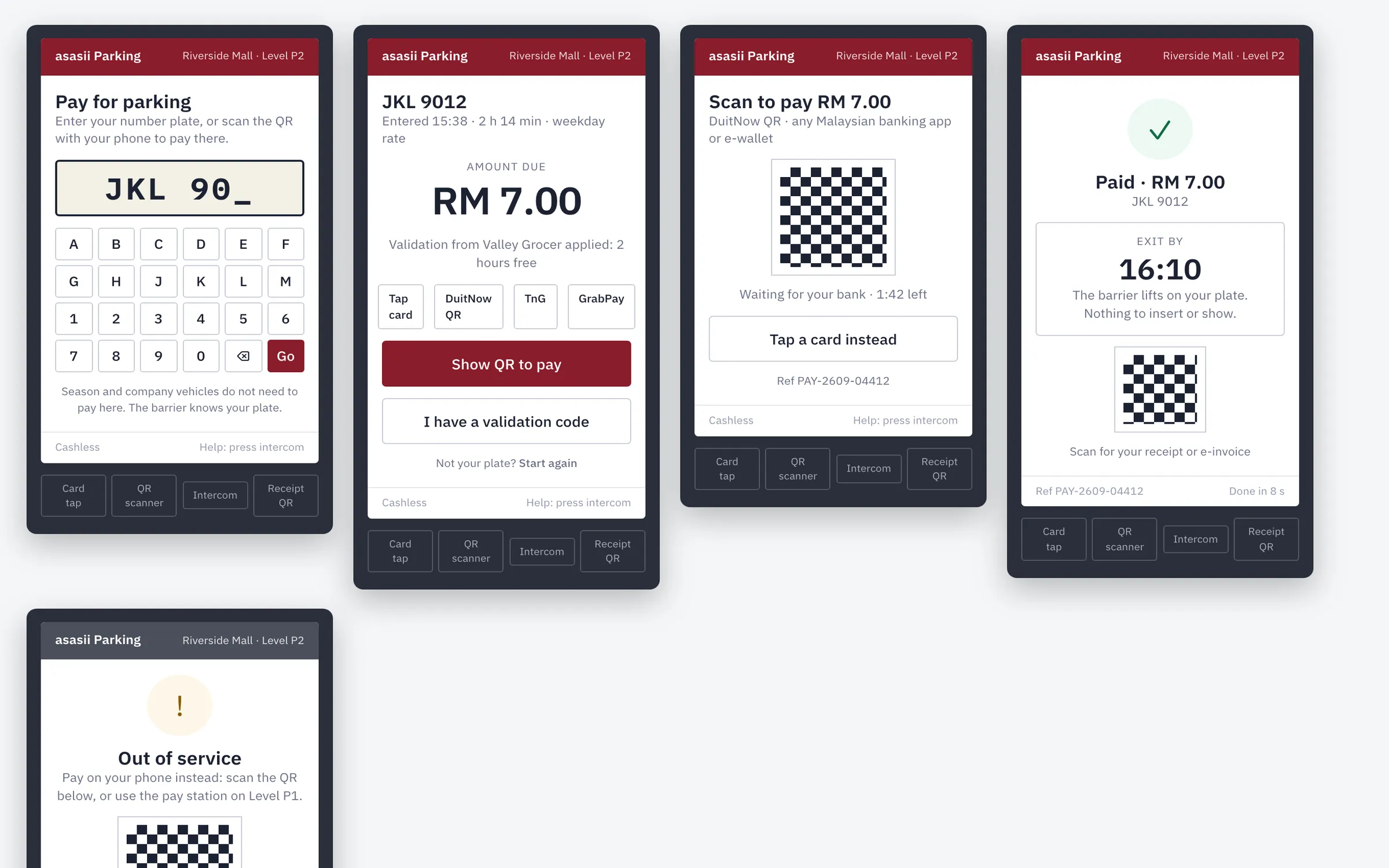
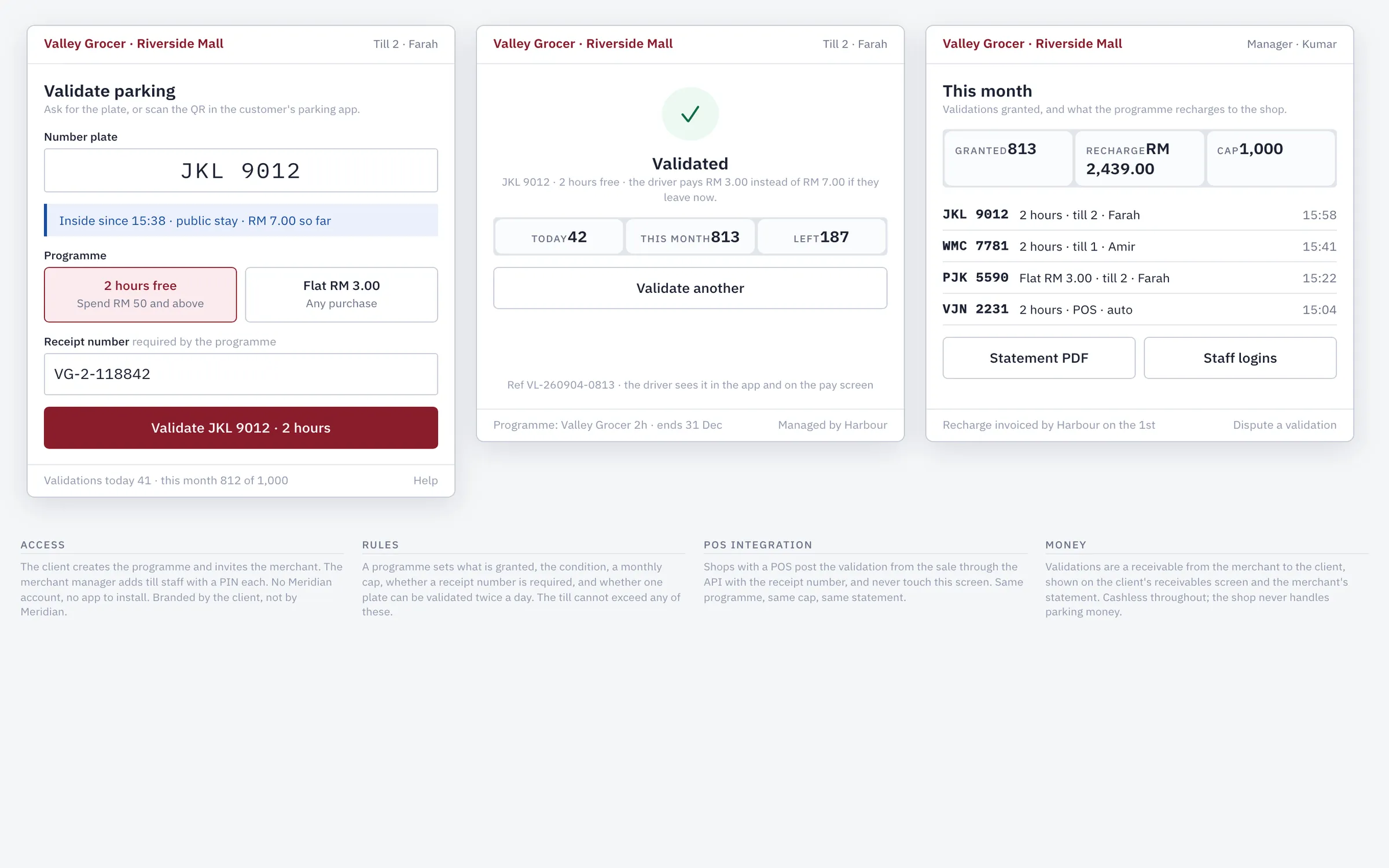
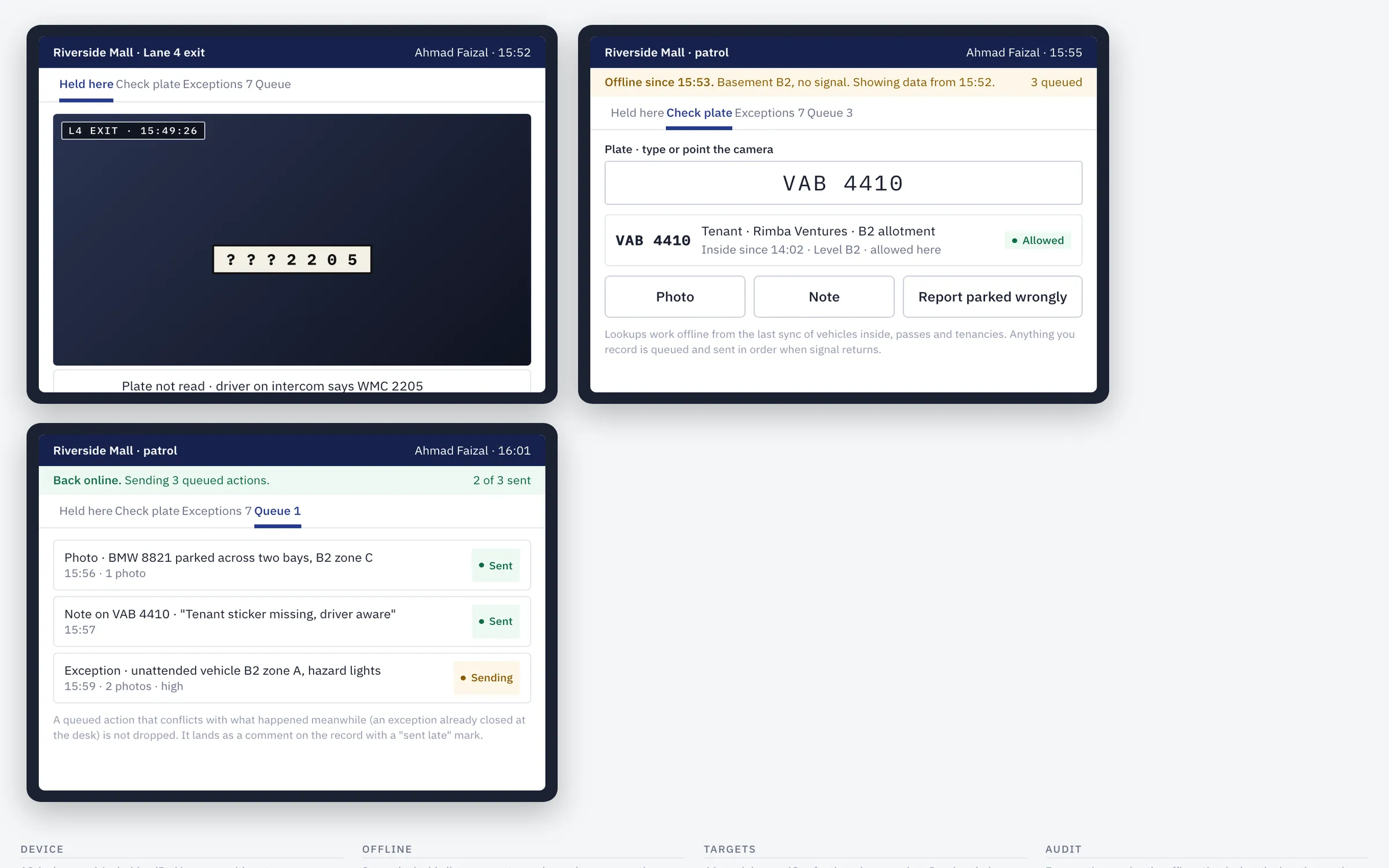
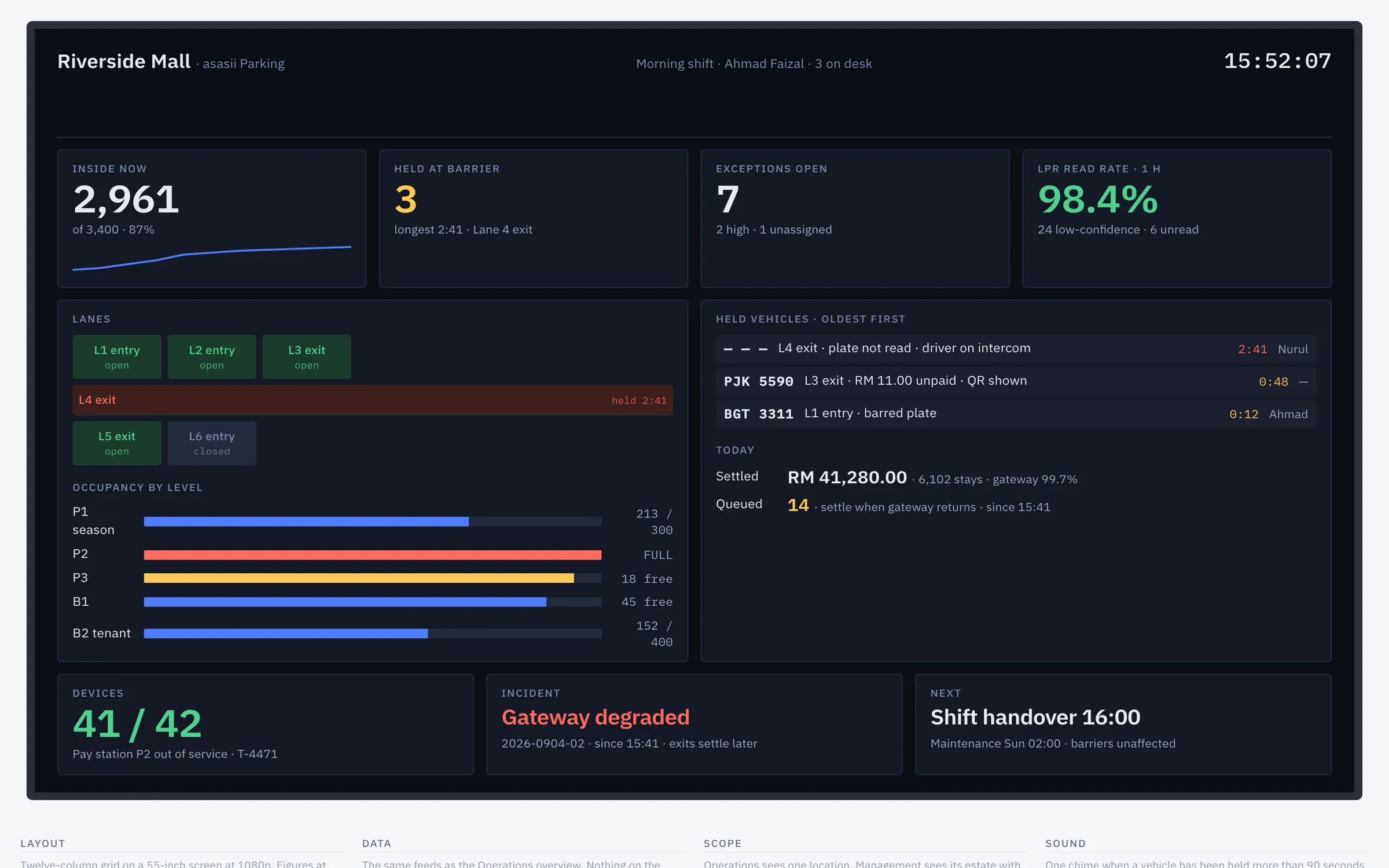
Two device types cover a lane. Everything else is software the property owns, deployed in its own environment, customised to its processes and maintained by idataraya under one agreement.
An asasii LPR controller reads the plate and drives the display. A high-speed barrier opens on its word. Two devices per lane, nothing else to fail.
Every lane talks to the platform over MQTT with a persistent session. A lane keeps working through a network drop and syncs when it returns.
Deployed in the property's own cloud account or data centre. idataraya installs it, hardens it and keeps it current; the property holds the keys, the backups and the data.
The tenant and lease register is read from the property's system of record, collections settle host-to-host with the bank, and a documented API gives the property's other systems and third parties access to sessions, passes and settlements.
Enterprise-grade security throughout, built for the questions an IT steering committee and an internal audit will ask before signing.
Single sign-on with the property's identity provider, MFA for every console, and roles scoped by client, location and function.
Every action in every console is recorded with who, when, where and the previous value. Exportable, retained on the property's schedule.
Plate images and personal data are kept under the Personal Data Protection Act 2010, with retention periods set per data class and purged on schedule.
Card data never touches the platform. Payments are taken by the acquirer's terminals and gateway, which keeps the property's PCI scope where it already is.
One annual agreement covers the software, its customisation, the monitoring and the people who attend to the site. Hosting stays with the property.
Severity-based response and restoration targets, measured and reported monthly. A lane down is a priority one.
Devices, lanes and services are monitored continuously from within the property's environment, with alerts to the property's team and to idataraya.
Backups run to the property's own storage. A failover drill and a full restore are run on a schedule and recorded in the IT console for the property to read.
Preventive maintenance visits, spare devices held for the site, and a technician on site within the agreed window when hardware fails.
There is no cash anywhere in the system, so there is nothing to count, float, collect or lose.
Every payment is a card, QR or account charge. Pay stations take cards and QR only.
Collections settle directly with the acquiring bank, not through a third party's wallet.
Settlement lands in the account the property nominates. Nobody else holds the money.
Every session and every season invoice is issued in the property's name, compliant with the national e-invoicing mandate from day one.
The bank statement is matched to sessions automatically. Finance reads a reconciled report, not a pile of receipts.
The commercial model is the opposite of a concession. The property buys a system and keeps everything it produces.
The property owns the software outright, with the devices, every record and the customisations made for it. Export is a button, not a negotiation.
idataraya is paid to build and run the platform, not a share of what the car park earns.
Software, customisation, monitoring and on-site attendance under one annual agreement with defined response times. Hosting is the property's own.
A second property joins the same platform with its own lanes, its own account and the same consoles. The group console reads them side by side.
Send us the site, the lane count and the tenancy schedule. We come back with a lane plan, a device list and a proposal.
Request a proposal